The Sexton paired Canadian armored-vehicle production with the British 25-pounder, giving Commonwealth armored formations a mobile artillery system that used their standard field gun and ammunition.
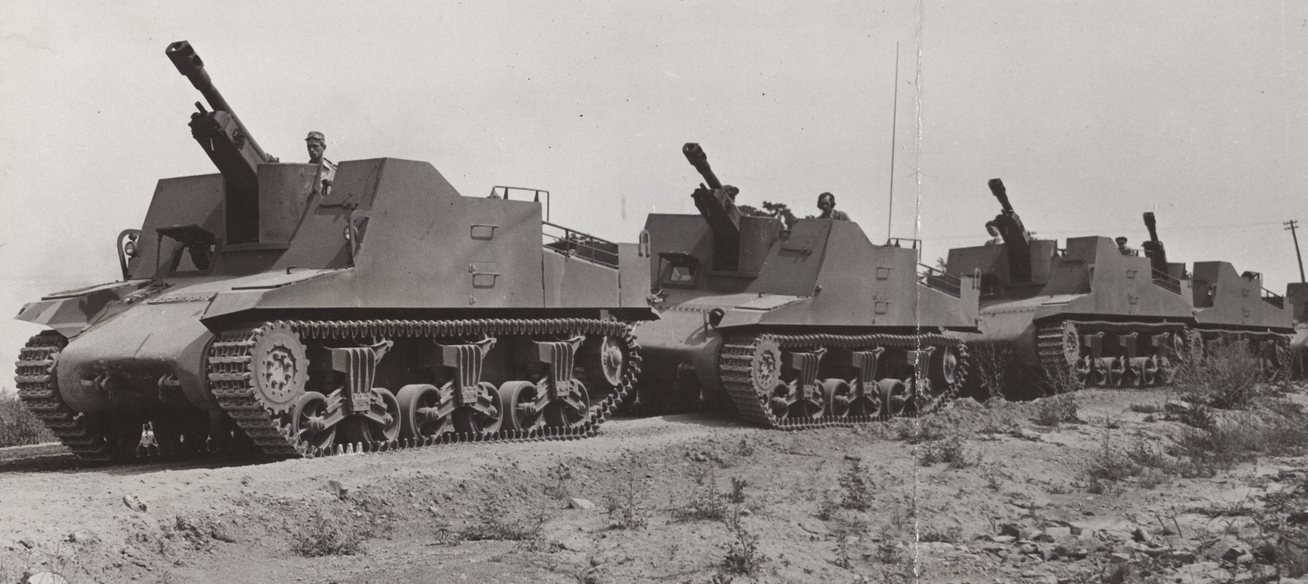
Sexton Family. Primary reference image for this archive profile. Source date: 1944-08-18.National Film Board of Canada/ Archival by La Presse; Public domainImage source
Rolearmored field artillery support
Main weapon / systemQF 25-pounder gun-howitzer
Platform / layoutCanadian Ram/Grizzly-derived chassis with open fighting compartment
MediaPrimary image integrated
Development and design
Canadian designers adapted the Ram/Grizzly automotive family into an open-topped self-propelled gun. Unlike the M7 Priest, the Sexton carried the British 25-pounder, simplifying ammunition supply for Commonwealth artillery units. 1, 2
Operational use
Sextons served with Canadian and British forces from Italy through Northwest Europe and remained in postwar service. Their mobility allowed field artillery to stay close to armored advances without relying on separate gun tractors. 1, 2
Role and significance
The Sexton was one of the most successful Commonwealth self-propelled artillery designs of the war and established a direct doctrinal line from improvised wartime systems to the postwar Abbot. 1, 2
Sources and further reading
Representative source set used for this profile. Primary image source and reuse terms are listed with the image.
.jpg)