Truck roots and protected mobility
The Pasi grew out of a practical Finnish requirement: put a useful infantry transport body on a vehicle that soldiers and workshops could keep running. Its commercial-truck ancestry was not an incidental detail. It placed the emphasis on carrying people, maintaining mobility and supporting a fleet over a long service life, rather than building a wheeled equivalent of a main battle tank. Production began in the 1980s, and the six-wheeled vehicle became associated with both Finland’s own forces and international peacekeeping. The family eventually encompassed substantially different national configurations under the Sisu and Patria names. 1, 2
Pasi production ended in 2003 as the eight-wheeled AMV entered series production. Existing fleets remained in use, however, and refurbishment became an important part of the older vehicle’s history. The industrial transition left armies with a choice between buying new carriers and extending the lives of vehicles already supported by their workshops. Finland subsequently invested in both approaches. 1, 4
A carrier before a fighting vehicle
The truck-like cab, with familiar access and driving arrangements, was an important part of the original approach. The protected interior was primarily transport space. A carrier has to accommodate soldiers and equipment, allow them to enter and leave, and remain useful during long movements between assembly areas, bases and patrol sectors. Those demands are different from designing a vehicle around a large turret. A family designation consequently tells less about an individual Pasi’s fighting capability than its actual mission equipment and national configuration. 2
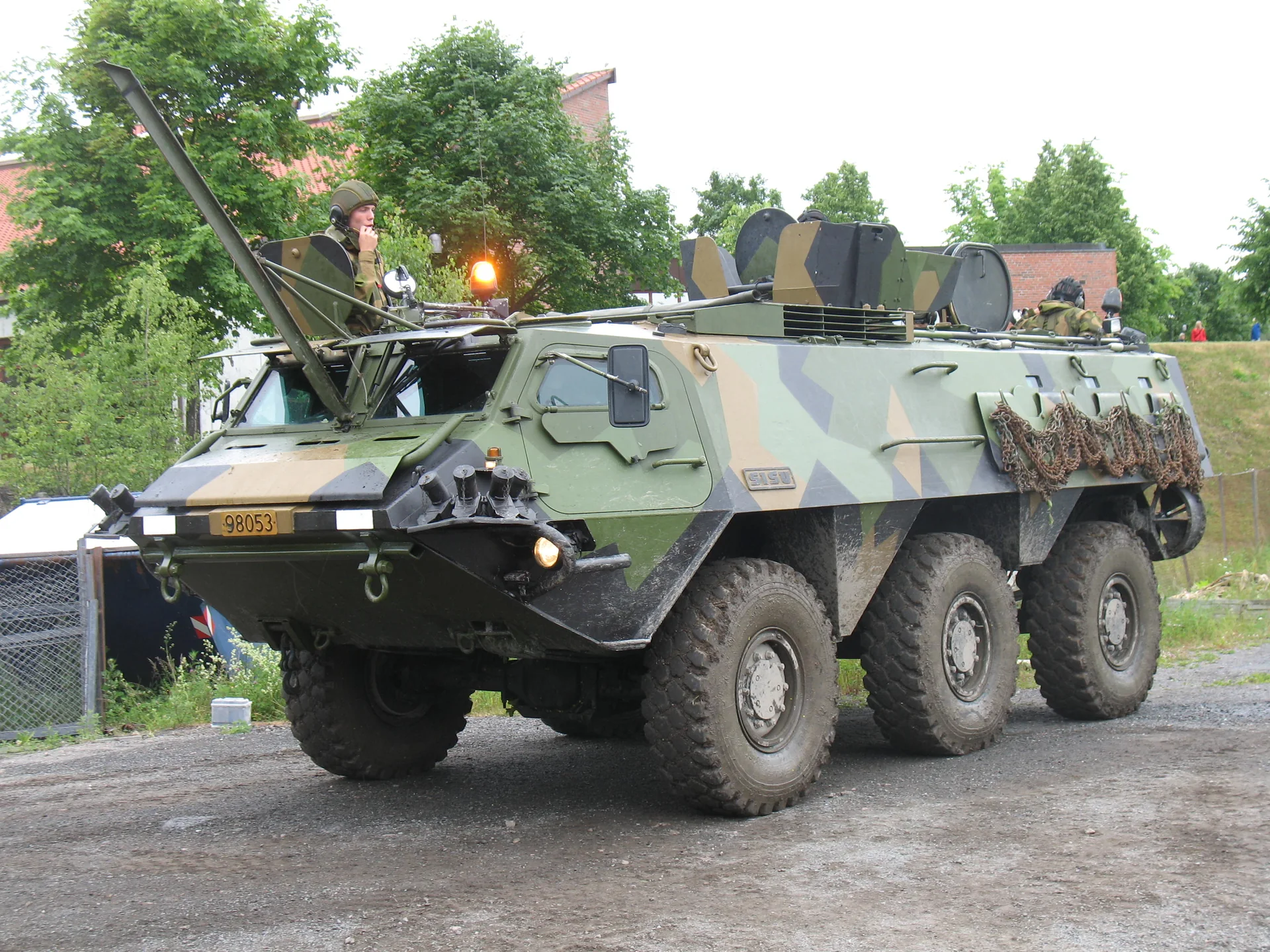
That distinction also sets limits on comparisons. A command vehicle trades some of its interior for communications equipment and workstations; an ambulance needs a different arrangement again. Neither should be described simply as an infantry carrier with the same number of seats. The Norwegian fleet illustrates the point particularly clearly: its XA-186s included personnel carriers and command vehicles as well as an ambulance and a workshop vehicle. Protected volume was being used to support an organization, not only to move its rifle squads. 3
National fleets and overseas use
Patria associates the original Pasi particularly with peacekeeping. For those missions, a protected transport vehicle had to support repeated patrols and long movements as well as carry soldiers and their equipment. Its commercial-truck background offered a different starting point from a heavily armed fighting vehicle. 1
Norway introduced the XA-186 command vehicle with Telemark Battalion in 1995 and used the type in Kosovo and at home. A command-vehicle upgrade reported in 2023 retained workstations, an antenna mast, a generator and electrical equipment. Its communications rack drew on the XA-203, while other fittings followed arrangements in the ACSV tracked support vehicle. Reuse connected the refurbishment to equipment already familiar elsewhere in Norway’s fleet. 3
Rebuilding the Finnish XA-180
Finland’s XA-180 mid-life work began with a contract in 2013. Patria reported completion of the project in November 2022, when the final upgraded vehicles were handed over. The work modernized electrical and communications systems and improved the crew space and seating. Engines, transmissions and axles were inspected, with repair or replacement where necessary. This was more than a change of radios: it combined the systems needed by the crew with attention to the machinery on which vehicle availability depended. 4
In its 2022 announcement, Patria expected the refurbished XA-180s to remain in service into the 2040s while the newer Patria 6x6 gradually took over. The intended overlap spread replacement across a longer period. It also gave the older carriers a continuing place alongside new vehicles, supported by repaired automotive components and renewed equipment for their crews. That projected service life remained a manufacturer’s expectation rather than a fixed retirement date for every hull. 4
Patria's completion notice identifies what the Finnish XA-180 mid-life program actually changed. The work included new electrical systems and communications equipment, updated crew-space seating, and inspection, repair or replacement as necessary of engines, power transmission and axles. Patria linked the program to keeping the vehicles usable into the 2040s. This was a fleet-life extension effort, not a claim that the refurbished XA-180 became the newer Patria 6x6 design. 4
The later XA family
Sweden continued investing in its Pansarterrängbil 203 branch. In February 2026, the Defence Materiel Administration announced modifications to another 58 vehicles, with Patria as supplier. The program was to begin that year and would reduce the number of variants and prepare the carriers for weapon stations. The emphasis on a more consistent fleet differed from the earlier growth of the family through specialist adaptations. 5
Fewer configurations can simplify workshop support and reduce differences between vehicles assigned to the same task. Sweden’s announced program addressed that problem through fleet standardization. Norway’s command-vehicle work instead reused selected existing fittings. Together, the projects illustrate two practical ways of renewing a long-serving carrier without replacing its hull. 3, 5
Pasi, AMV and the newer Patria 6x6
The newer Patria 6x6 carried forward the idea of a straightforward multipurpose carrier, but it was a separate design. Its final development took place in 2016–2017, followed by presentation in 2018. Patria described an automotive component relationship with the AMV and a different internal layout. It continued Pasi’s transport role without being another XA-180 configuration. 2
Sources and further reading
References and further reading are listed below. Image identification, credit and reuse terms remain with each photograph.
- Patria, Agility on the street and off road (17 June 2015)
- Patria, Patria 6X6: Multifunctional transport capacity far into the future (11 June 2018)
- Norwegian Defence Materiel Agency, Mye gjenbruk i Gardens oppgraderte ledelsesvogner (16 May 2023)
- Patria, XA-180 mid-life upgrade completed
- Swedish Defence Materiel Administration, FMV genomför modifieringar av Pansarterrängbil 203 (9 February 2026)
Visit an Armor Museum
Explore the worldwide museum directory to find armored vehicles, collections, and visitor-planning information.
Browse armor museums