
Development and requirement
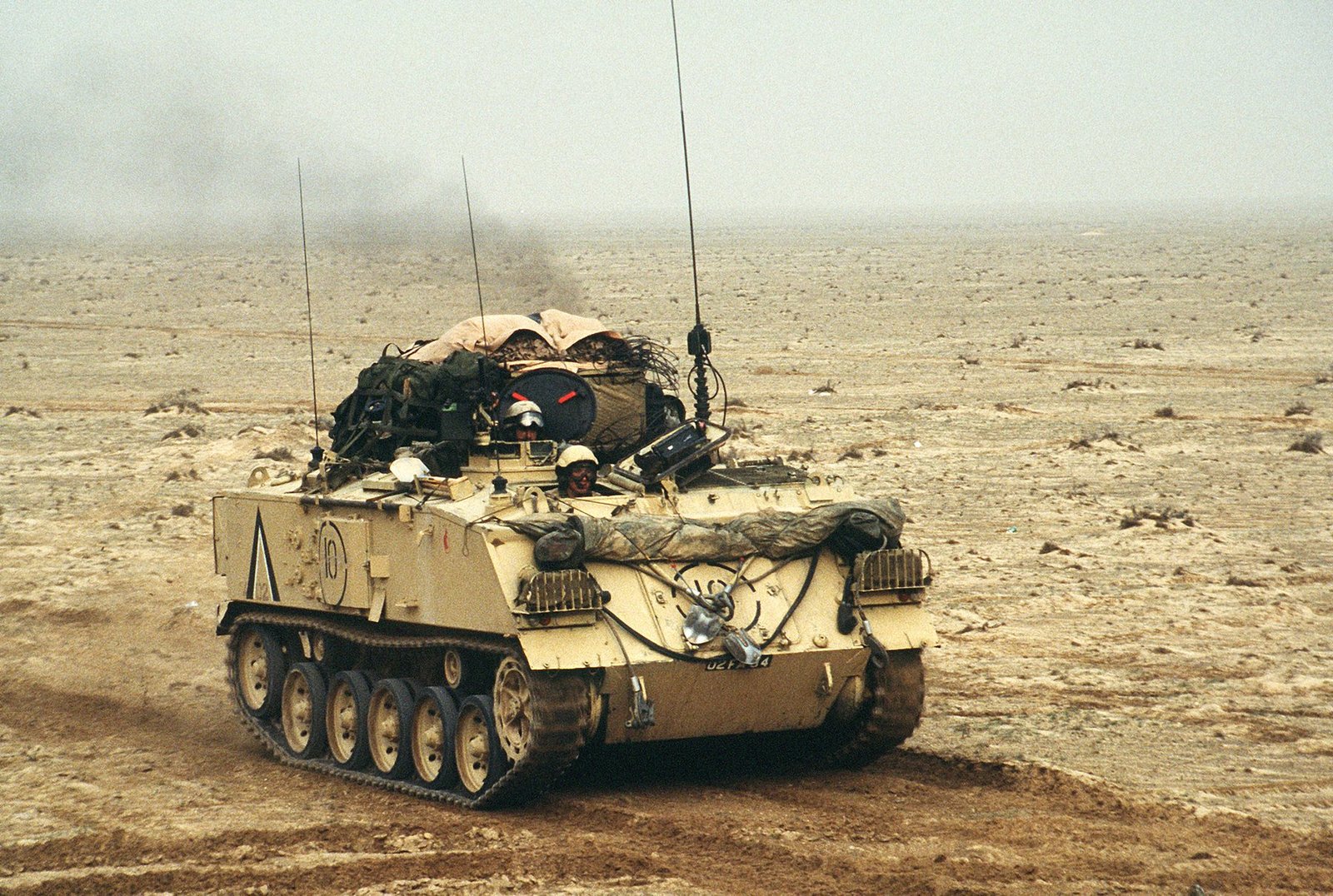
Britain developed the FV430 family to provide a common tracked chassis for armored support and troop transport. The FV432 became the most numerous member, carrying infantry in armored formations from the 1960s. Its utilitarian design emphasized protected volume and commonality rather than heavy turreted firepower. 1, 2
Design and fighting role
FV432 uses a front engine, rear troop compartment, and simple tracked suspension. The baseline carrier was lightly armed, reflecting its APC role. The later Bulldog modernization added a new diesel engine, automatic transmission, protection improvements, and other changes that extended the platform’s service life in Iraq-era operations. 1, 2
Service and evolution
FV432 served as a troop carrier before Warrior took over the frontline armored-infantry role, but the FV430 family remained valuable for ambulances, command posts, mortar carriers, and other support missions. Bulldog upgrades returned selected vehicles to demanding operational use with improved protection and automotive performance. 1, 2
Archive boundaries
FV432 is an APC family, not an IFV, despite later armor and weapons improvements. Mortar, command, ambulance, and recovery variants stay linked to the FV430 lineage but are not counted as ordinary personnel carriers if profiled individually. 1
Sources and further reading
Representative source set used for this profile. Primary image source and reuse terms are listed with the image.