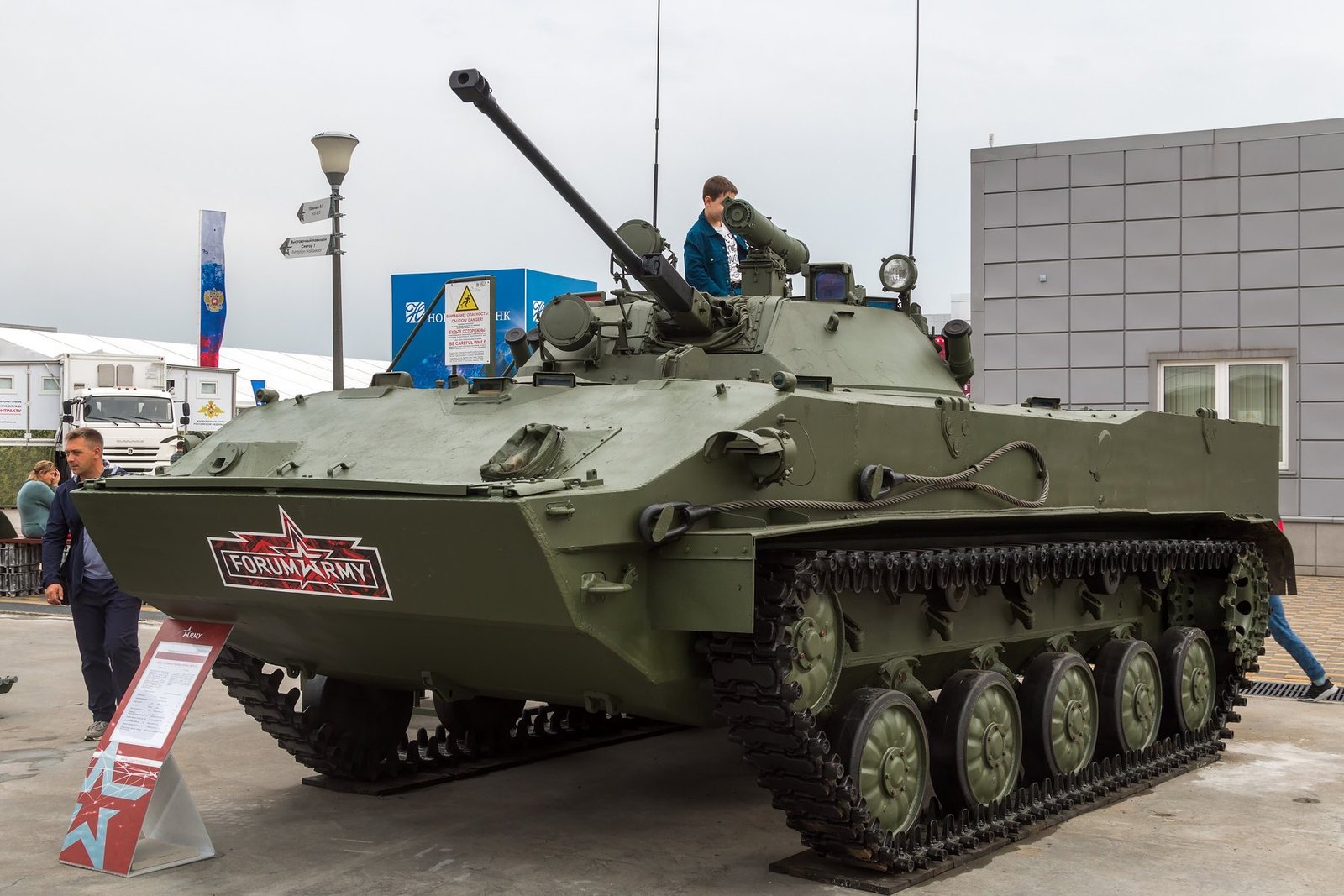

Development and requirement
The BMD-3 was developed as a larger airborne combat vehicle with more internal volume and growth potential than the BMD-1/2 line. The later BMD-4 placed a much heavier combat module on that lineage, and BMD-4M revisions increased commonality with BMP-3 automotive components. 1
Design and battlefield role
The later family emphasizes unusually heavy firepower for an airborne IFV. Its design still accepts the weight and protection compromises inherent in parachute-deployable armor, but compensates with mobility, a compact crew/troop layout, and a flexible weapons suite. 1
Service and evolution
BMD-4M became the principal modern expression of the Russian airborne IFV idea and spawned closely related carrier and specialist platforms. That makes the family useful for showing how one airborne chassis ecosystem can support both fighting and support roles. 1
Archive boundaries
The archive keeps BMD-3/4 as IFVs because their primary role is to transport and fight with airborne infantry. BTR-MD and BTR-MDM are carrier derivatives and therefore belong in the APC category. 1
Sources and further reading
Representative source set used for this profile. Primary image source and reuse terms are listed with the image.