
Development and requirement
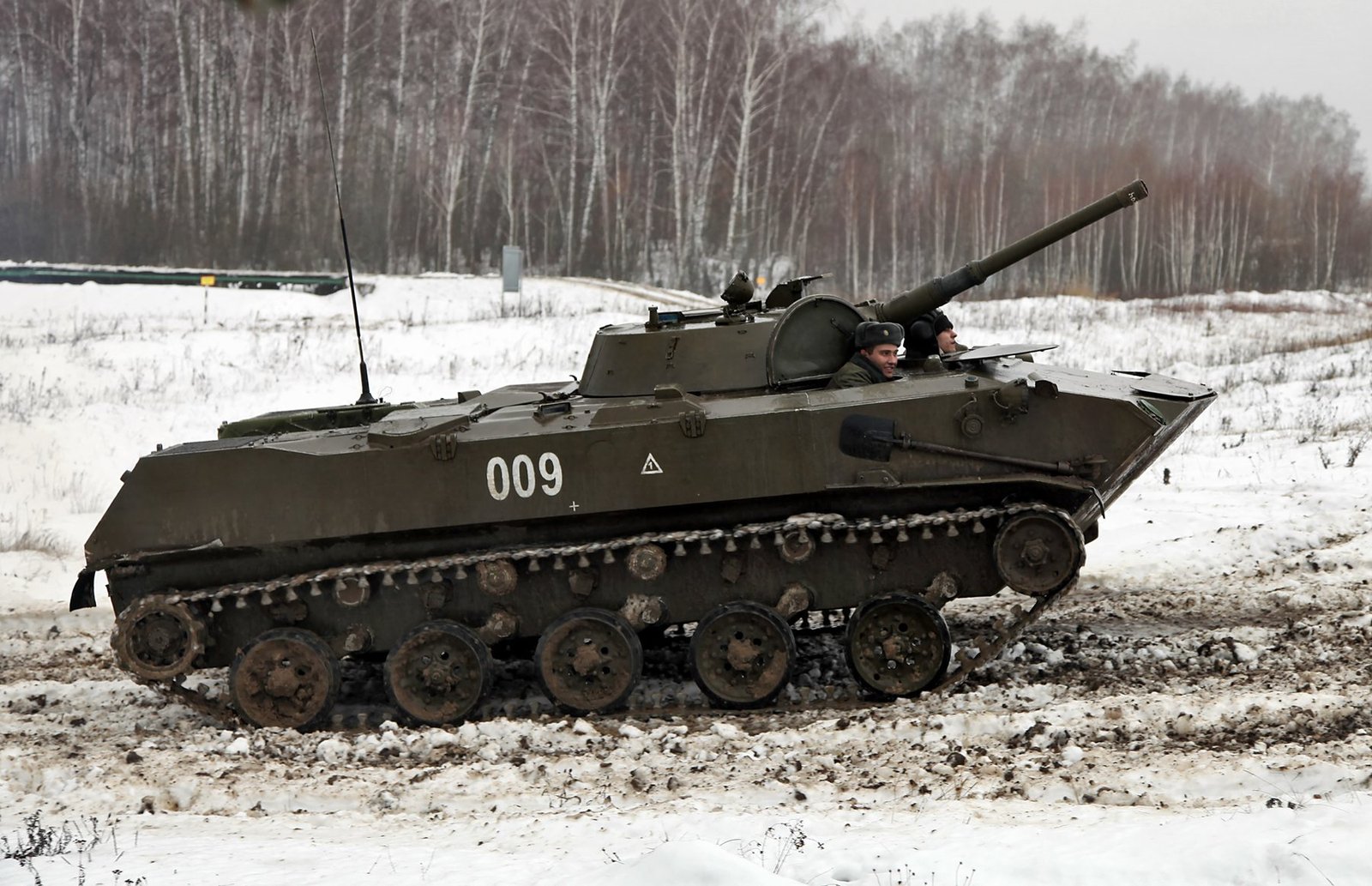
Soviet airborne forces wanted protected mobility and fire support that could arrive with paratroopers rather than wait for heavier ground formations. The BMD-1 answered that requirement with a compact, lightweight chassis and a weapons arrangement related to the early BMP concept. 1
Design and battlefield role
Weight and dimensions were constrained by air transport and parachute delivery. The BMD-1 combined a low-profile hull, adjustable suspension, amphibious capability, and turret armament; the BMD-2 later introduced a 30 mm autocannon-oriented combat system while retaining the same operational logic. 1
Service and evolution
BMD vehicles became characteristic equipment of Soviet and later Russian airborne formations. Combat experience in Afghanistan helped drive the BMD-2, while later generations pursued more firepower, protection, and automotive commonality. 1
Archive boundaries
The BMD-1 and BMD-2 are grouped because they are successive early-generation airborne IFVs. The BTR-D is classified separately as an APC even though it comes directly from the BMD-1 chassis. 1
Sources and further reading
Representative source set used for this profile. Primary image source and reuse terms are listed with the image.