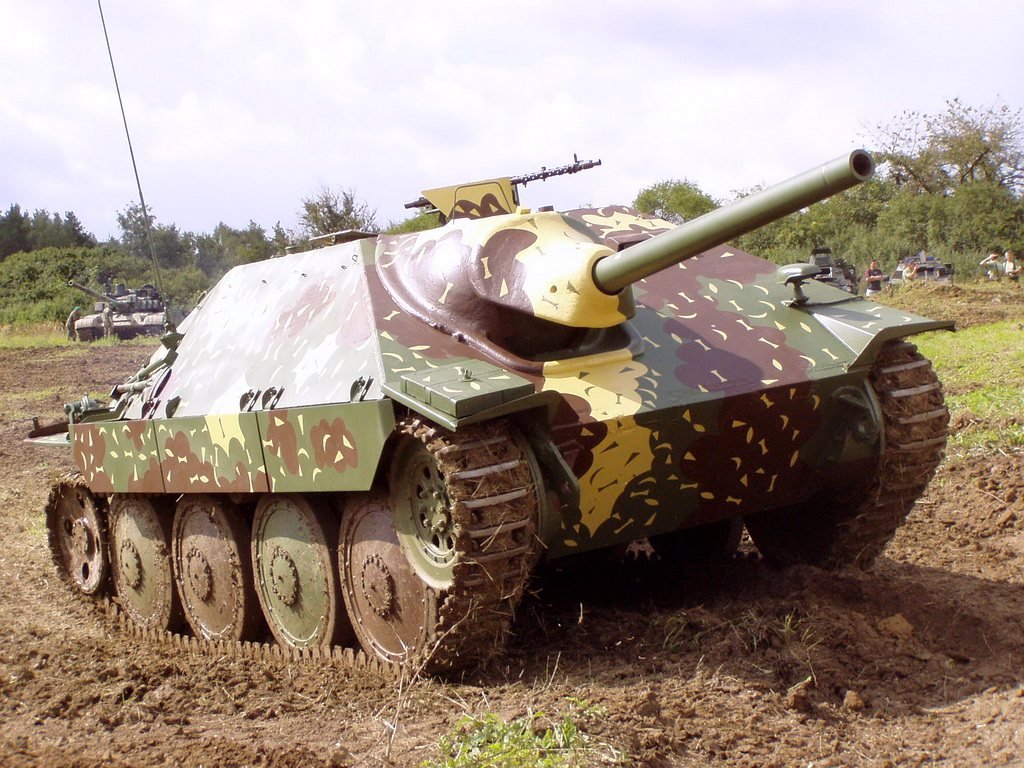

Development and design
Its sharply sloped casemate and 75 mm PaK 39 gave a small silhouette and useful frontal protection, but the cramped interior, offset gun, and limited traverse imposed real crew and handling penalties. The popular name “Hetzer” is now standard in public usage even though wartime naming was less straightforward. 1, 2
Operational use
Most vehicles equipped antitank companies in infantry divisions, where concealment and ambush tactics suited the design. Its small size helped defensive employment, while thin side armor and restricted internal space discouraged aggressive close combat. 1, 2
Role and significance
The vehicle represents Germany’s search for a mass-producible closed tank destroyer that required fewer resources than heavier Jagdpanzer designs. Its postwar Swiss G13 descendant also shows how usable the basic chassis concept remained. 1, 2
Sources and further reading
Representative source set used for this profile. Primary image source and reuse terms are listed with the image.