
Development and requirement
Germany and the Netherlands developed Boxer through the multinational ARTEC program, creating a new generation of highly protected wheeled armored vehicles. The design entered service around the end of the 2000s and later attracted additional users, including the United Kingdom. The program’s defining idea was modularity at the vehicle-architecture level rather than a fixed troop carrier with minor variants. 1, 2
Design and fighting role
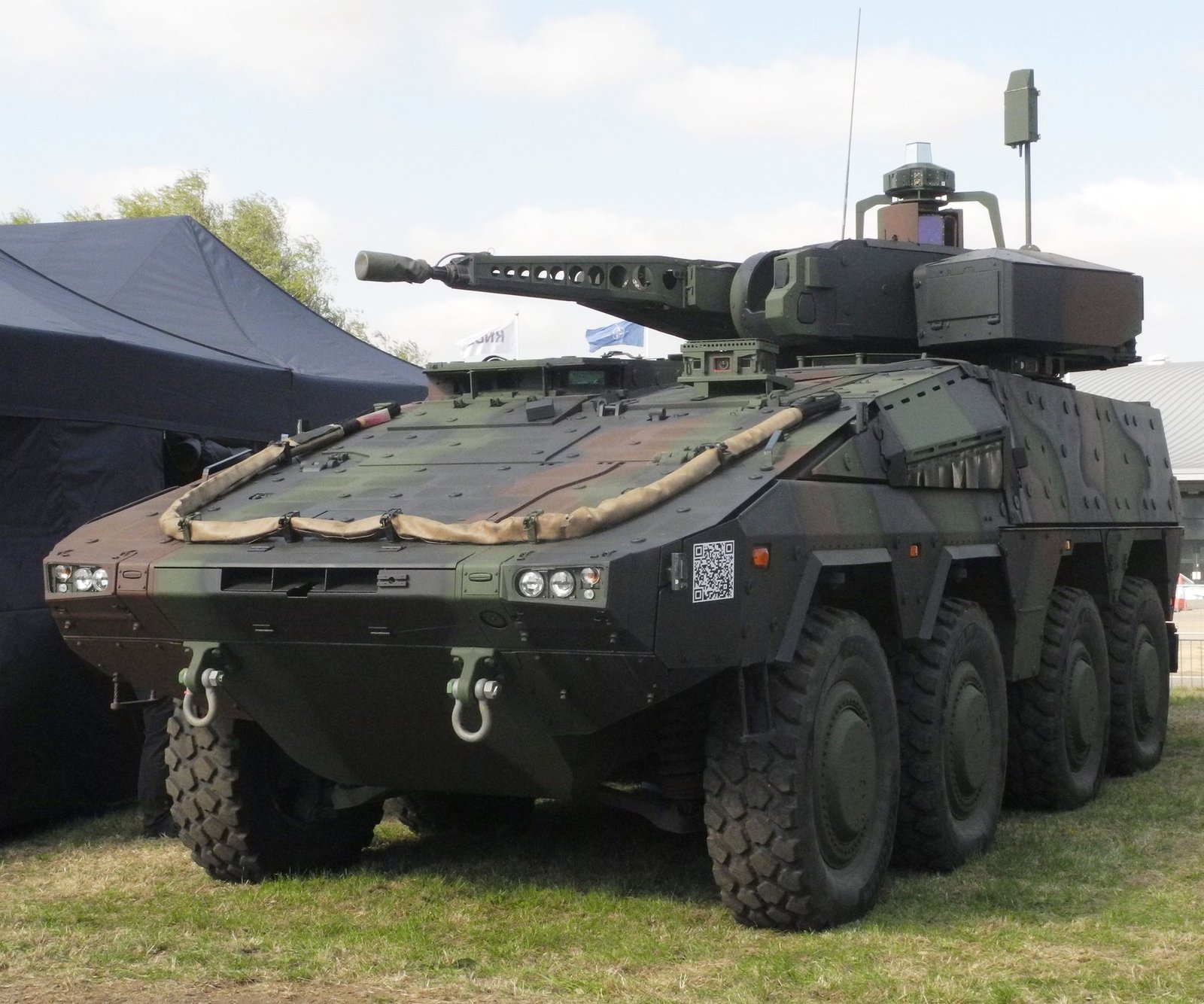
Boxer combines a standardized 8x8 drive module with removable mission modules. Troop-carrier versions provide protected infantry mobility, while other modules support command, ambulance, engineering, maintenance, and increasingly direct combat roles. High protection, internal volume, digital systems, and payload growth make the vehicle substantially heavier than earlier Cold War wheeled APCs. 1, 2
Service and evolution
Boxer has expanded across multiple national fleets and continues to add mission types, including turreted infantry, reconnaissance, artillery, and air-defense solutions. The British Army is introducing Boxer as the central vehicle for heavy mechanized infantry, replacing Warrior-based armored infantry structures with a different wheeled concept. 1, 2, 3
Archive boundaries
The family is anchored here as an APC/protected mobility platform, but a Boxer with a 30 mm IFV turret, artillery system, or air-defense module should be classified by that mission if it receives its own profile. Modularity does not erase battlefield role. 1
Sources and further reading
Representative source set used for this profile. Primary image source and reuse terms are listed with the image.