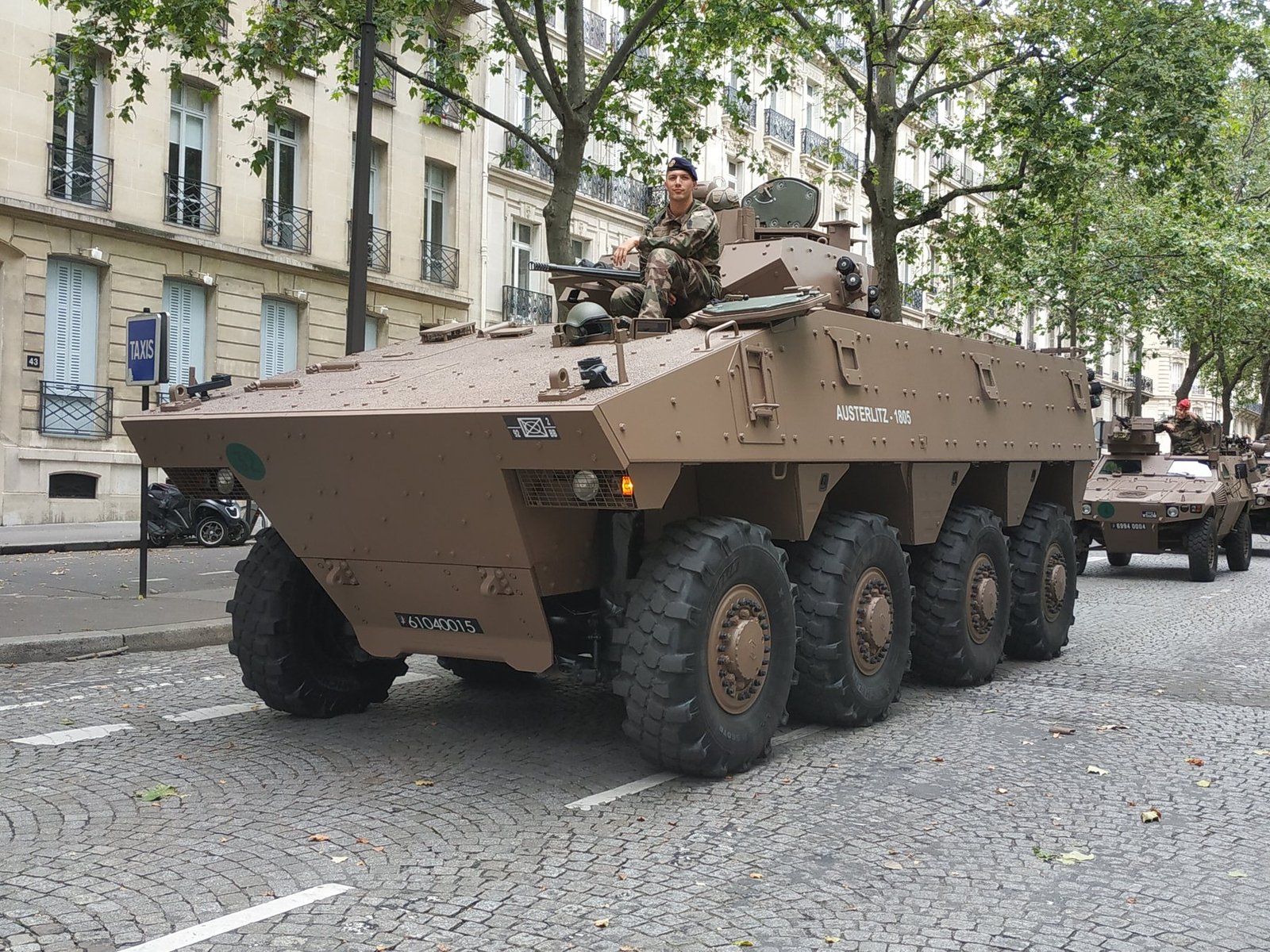
_(4).jpg)
Development and requirement
France developed VBCI to replace the aging AMX-10P and provide protected mobility for infantry in armored and multirole brigades. The French Army and DGA describe two principal forms: the VCI infantry combat vehicle and VPC command vehicle. The program reflects a deliberate shift toward wheeled operational mobility without giving up the protection and fire-support functions expected of mechanized infantry. 1, 2
Design and fighting role
The VBCI is an 8x8 vehicle with an aluminum hull supplemented by additional protection. The VCI mounts a 25 mm cannon and carries a combat group, while digital systems support navigation, situational awareness, and command. The vehicle is designed for day or night operations under infantry, artillery, and CBRN threats, and later protection packages increased weight to address mine and improvised-explosive threats. 1, 2
Service and evolution
VBCI has been used operationally by French forces and became a central platform for heavy infantry. Its road mobility and long range support expeditionary movement, while armor, sensors, and cannon allow the vehicle to deliver troops close to the objective and continue supporting them after dismount. 1, 2
Archive boundaries
The VCI and VPC share the VBCI platform, but only the VCI is an IFV in the narrow sense. The archive keeps them together as a family because the chassis and program are common while describing the command variant accurately. 1
Sources and further reading
Representative source set used for this profile. Primary image source and reuse terms are listed with the image.