
Development and requirement
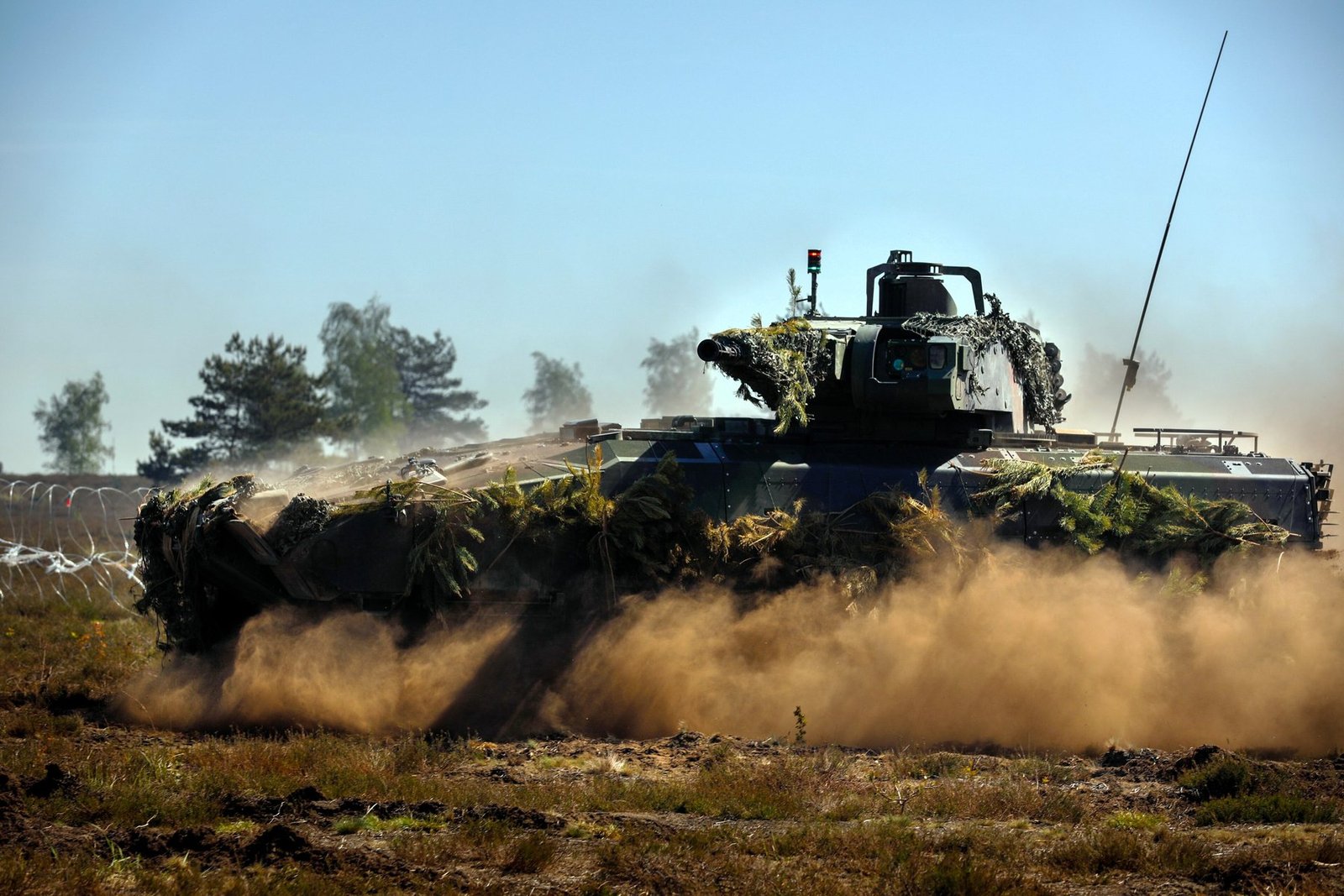
Germany developed Puma to replace Marder while meeting demanding requirements for protection, mobility, and deployability. The program produced a vehicle centered on a heavily protected crew compartment, remote turret, modern sensor architecture, and the ability to fight as part of a networked combined-arms formation. The Bundeswehr describes Puma as the new “mother ship” of the Panzergrenadiers, intended to work closely with Leopard 2. 1, 2
Design and fighting role
The remote weapon installation separates the crew from turret ammunition and allows the three vehicle crew to remain in the hull. A stabilized 30 mm cannon, modern optics, digital systems, and modular armor are central to the design. The vehicle carries six dismounts and uses a powerful engine to maintain mobility despite a high protection level and substantial growth in combat weight. 1, 2
Service and evolution
Puma entered Bundeswehr service in the mid-2010s and has undergone continuing work on readiness, networking, optics, weapons, and integration with dismounted soldiers. Its development illustrates the increasing complexity of modern IFVs: vehicle performance depends as much on electronics, software, sensors, and supportability as on armor and gun caliber. 1, 2
Archive boundaries
Puma is treated separately from Marder because it represents a new vehicle architecture and generation. Incremental capability packages remain inside the Puma profile unless a future derivative changes the vehicle’s battlefield mission. 1
Sources and further reading
Representative source set used for this profile. Primary image source and reuse terms are listed with the image.