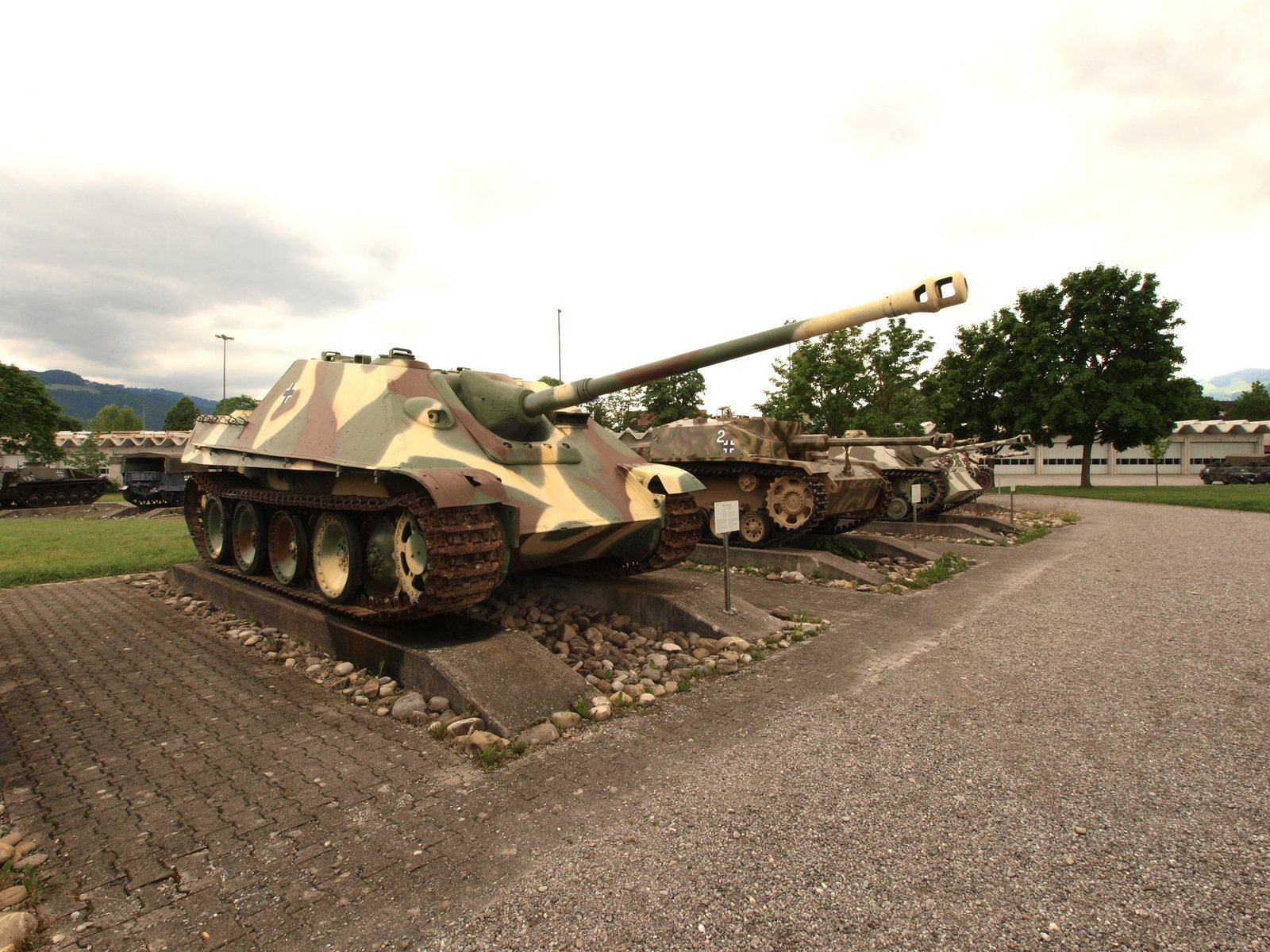

Development and design
Eliminating the turret created room for the larger gun and kept the silhouette lower than a turreted heavy tank. The arrangement also meant the driver sometimes had to pivot the entire vehicle to track targets outside the gun’s limited traverse, adding stress to the Panther-derived drivetrain. 1, 2
Operational use
Jagdpanthers entered service in 1944 and fought in small numbers on both Eastern and Western fronts. In prepared positions their gun and frontal armor made them dangerous ambush weapons, but mechanical reliability, limited production, and crew/logistics constraints reduced their strategic impact. 1, 2
Role and significance
Among German casemate destroyers, the Jagdpanther came closest to balancing gun power, protection, and mobility rather than maximizing only one of those qualities. 1, 2
Sources and further reading
Representative source set used for this profile. Primary image source and reuse terms are listed with the image.