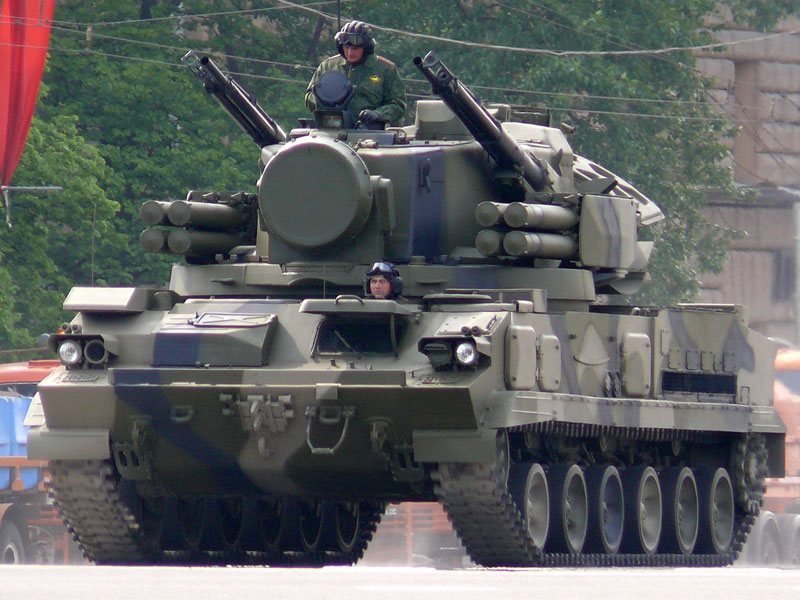

Roletracked integrated gun/missile air defense
Main weapon / systemtwin 30 mm cannon plus 9M311-family missiles
Platform / layoutGM-series tracked air-defense chassis
MediaPrimary image integrated
Development and design
Tunguska was designed as a successor to Shilka and paired automatic cannon with guided missiles, allowing one vehicle to cover the close-in zone with guns and engage targets farther out with missiles. 1, 2
Operational use
Later M and M1 versions improved missiles, radar, digital interfaces, and battery-level target assignment while retaining the same integrated gun/missile concept. 1, 2
Role and significance
Tunguska became one of the clearest expressions of Soviet layered maneuver air-defense doctrine compressed into a single armored vehicle. 1, 2
Sources and further reading
Representative source set used for this profile. Primary image source and reuse terms are listed with the image.