
Historical overview
The TAM 2C / 2CA2 is not a new tank family in the structural sense; it is a modernization line for Argentina's TAM, a 30-ton class medium tank/light MBT originally designed with West German assistance in the 1970s. The modernization shows how a state with limited resources and a mature domestic maintenance base can preserve an existing tracked armored fleet by upgrading sensors, fire-control, stabilization, power generation, and crew survivability rather than buying a heavier foreign main battle tank. Sources
The official Argentine account dates the modernization framework to a 2010 memorandum of understanding with Israel, followed by work at the Batallon de Arsenales 602 in Boulogne from 2011 and completion, testing, and approval of the TAM 2C prototype in 2014. Later public material distinguishes the TAM 2CA2 / 2C-A2 as a refined standard tested in 2023 and delivered in operational numbers from 2024. Sources
The most important forms are the base TAM, the early TAM 2C demonstrator/upgrade standard, and the later TAM 2CA2 / 2C-A2 standard. The wider family includes VCTP infantry fighting vehicles, VCA 155 self-propelled artillery, recovery, command, mortar, and rocket-launcher derivatives, but those are treated here as family-context vehicles rather than core tanks. Sources
Major uncertainties remain. Original TAM production totals vary by source: Forecast International reported 193 delivered gun tanks as of January 1997, while later secondary accounts commonly give totals around 200 or 231 TAM gun tanks, and project the cited accounts summaries use a broader TAM-family figure of about 280 tanks plus variants. The TAM 2CA2 conversion plan is much clearer at the top level: official Argentine sources repeatedly describe a first stage of 74 vehicles, but later reporting discusses a possible additional batch. Sources
TAM 2C / 2CA2 is a pragmatic and strategically revealing modernization. It does not transform the TAM into a heavy, high-protection MBT, but it makes Argentina's existing armored force far more usable at night and in poor weather, improves fire-on-the-move performance, and extends a domestically supported fleet into the 2020s. Sources
Argentina's original TAM program emerged from a particular strategic and industrial problem. By the late 1960s and early 1970s, the Argentine Army needed to replace aging World War II and early Cold War armored vehicles, diversify away from dependence on a single supplier, and obtain vehicles suitable for national roads, bridges, rail movement, and varied terrain. A heavy imported MBT would have imposed weight and infrastructure penalties; a purely domestic new tank would have strained industry and time. Sources
The answer was a German-assisted vehicle family based on the Marder infantry fighting vehicle chassis. Thyssen-Henschel received the mid-1974 contract to develop a 30-ton class medium tank and related vehicle family for Argentina. The resulting TAM combined a 105 mm gun, high road speed, and a compact silhouette with a front powerpack and rear turret. Sources
The modernization problem four decades later was different. Argentina no longer needed to invent a new national chassis; it needed to keep an aging armored force credible. The official 2020 modernization article described the TAM as the Argentine Army's main armored and mechanized element and framed the TAM 2C project as a response to age and technological lag. Sources
The core doctrine implied by the modernization is not frontal dueling with the heaviest modern MBTs. Instead, the program enhances the TAM's ability to find, identify, track, and engage targets in day/night and poor-weather conditions, improve precision while static and moving, reduce crew workload, and retain a locally maintainable force structure. Sources
Politically and industrially, the program became a defense-industrial partnership. Israel supplied key technology through Elbit Systems, while Argentine Army arsenals, DIGID, IMPSA, Fabricaciones Militares, and other local actors carried out integration, turret work, testing, and sustainment tasks. Argentine official material explicitly emphasizes local labor, training, and technology transfer. Sources
Development and variants
It includes the TAM 2C prototype/upgrade standard, the TAM 2CA2 / TAM 2C-A2 operational modernization, relevant base TAM production context, and principal TAM-family non-tank derivatives for lineage awareness. Sources
Excluded from core the VCTP IFV, VCA 155 Palmaria self-propelled howitzer, VCTM mortar carrier, VCPC command post vehicle, VCRT recovery vehicle, and VCLC rocket-launcher concepts are not counted as tanks in the cited record. Sources
Classification and boundary issues: the TAM was designed as a medium tank and is often described as a light MBT because of its 30-ton weight, 105 mm armament, and MBT-style turreted direct-fire role. The 2C / 2CA2 standard does not change that fundamental classification. Its major improvements are electronic, optical, power-management, and fire-control upgrades. Sources
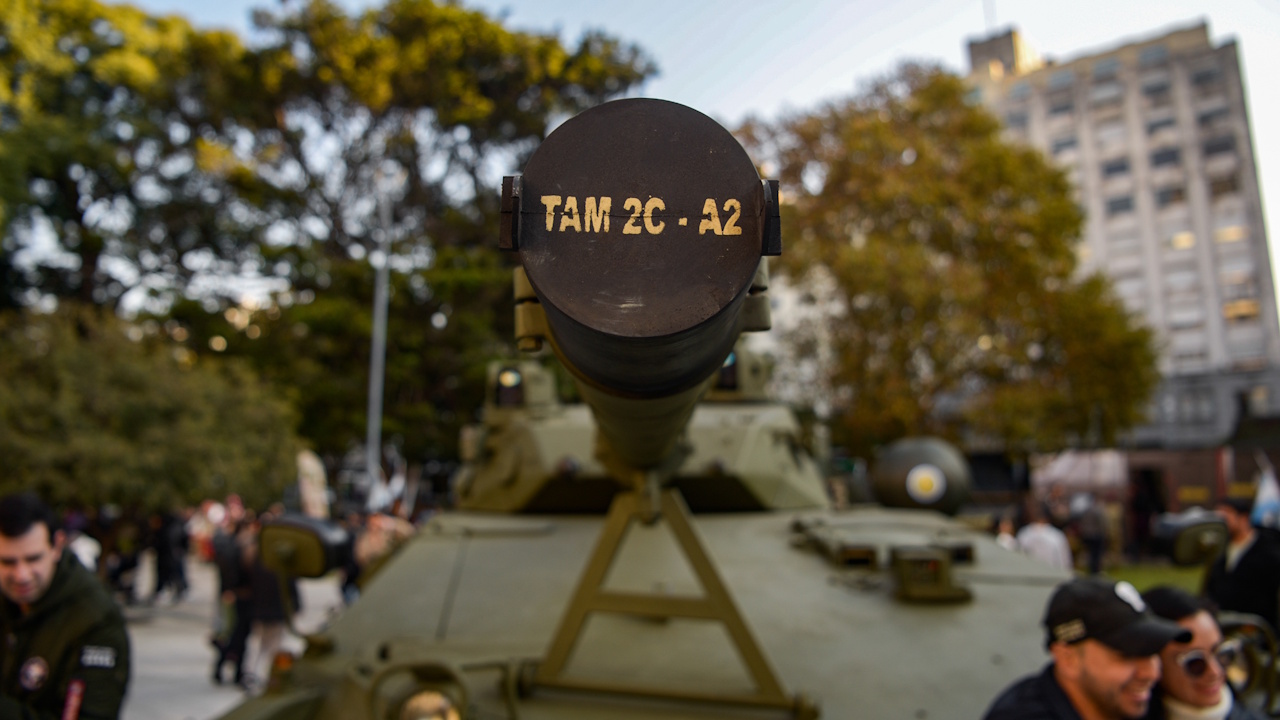
The potential confusion is instead semantic: TAM 2C, TAM 2CA2, TAM 2C-A2, TAM 2C A2, TAM 2CAC, and TAM 2C AC appear in different official and secondary contexts. Published accounts describe TAM 2CA2 / 2C-A2 for the later A2 standard and TAM 2C for the earlier modernization standard. Sources
The TAM's lineage runs through the West German Schutzenpanzer Marder. Forecast International described the TAM chassis as based on the Marder but strengthened for tank stresses, with a rear welded turret and a front-left driver beside a front-right powerpack. The June 1974 contract, September 1976 prototype completion, 1978 trials, and 1979 first production vehicles form the base chronology. Sources
Argentine assembly and component work were central from the outset. Forecast International identified Rio Tercero as the site for construction and integration of the C.360-TAM L51 gun and turret, while final assembly and chassis construction were performed in Buenos Aires. Sources
The modern TAM 2C project traces officially to 2010, when Argentina and Israel signed an understanding oriented toward industrial and technological defense cooperation. That agreement became the basis for the later TAM 2C modernization arrangement. In 2011, the Argentine Army's Directorate General for Research and Development began modernization activity at Batallon de Arsenales 602 in Boulogne. Sources
The official 2020 account states that the prototype phase ended in 2014, when the prototype was completed, tested, approved, and a new agreement was signed for modernization of 74 TAM combat vehicles to the TAM 2C version. Some secondary sources state that the first TAM 2C vehicle was ready or publicly visible in 2013. The difference likely reflects public presentation versus official completion/acceptance, and Published accounts describe 2014 as the well-documented official approval date. Sources
The A2 standard became visible in official reporting in 2023. In May 2023 the defense minister supervised firing and adjustment trials at Magdalena for a TAM in the TAM 2CA2 version; official text emphasized all-weather combat, a digitalized fire-control system, and replacement of the original hydraulic turret movement with an electric system. Sources
In July 2023 officials reviewed technical-operational evaluation results at the Arsenals Directorate / Batallon de Arsenales 602 and presented a second prototype. The official report described the modernization as an Elbit-IMPSA arrangement and noted that 70 percent of components, spares, and maintenance inputs were of national origin; it also emphasized production-line and certification processes. Sources
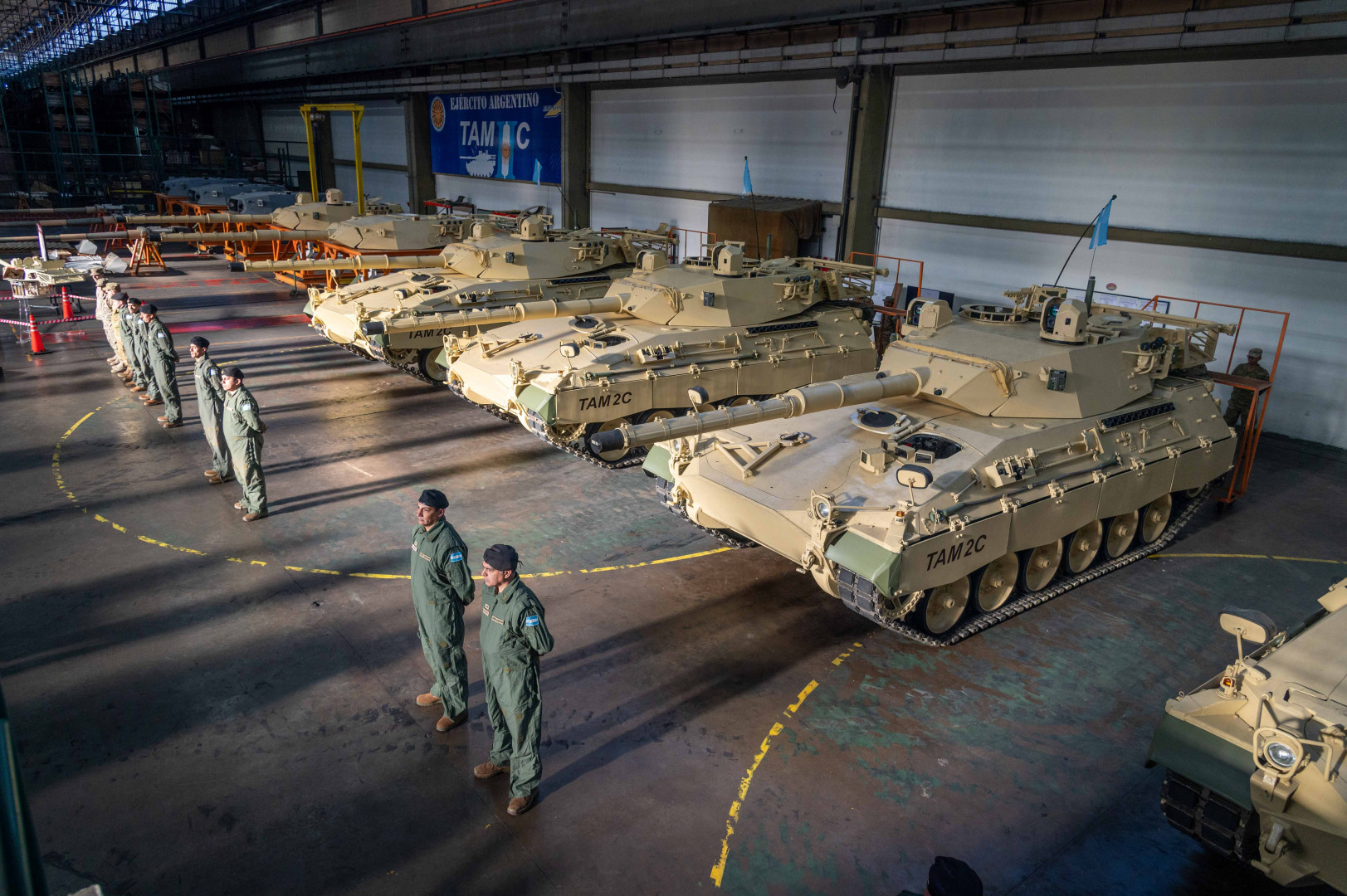
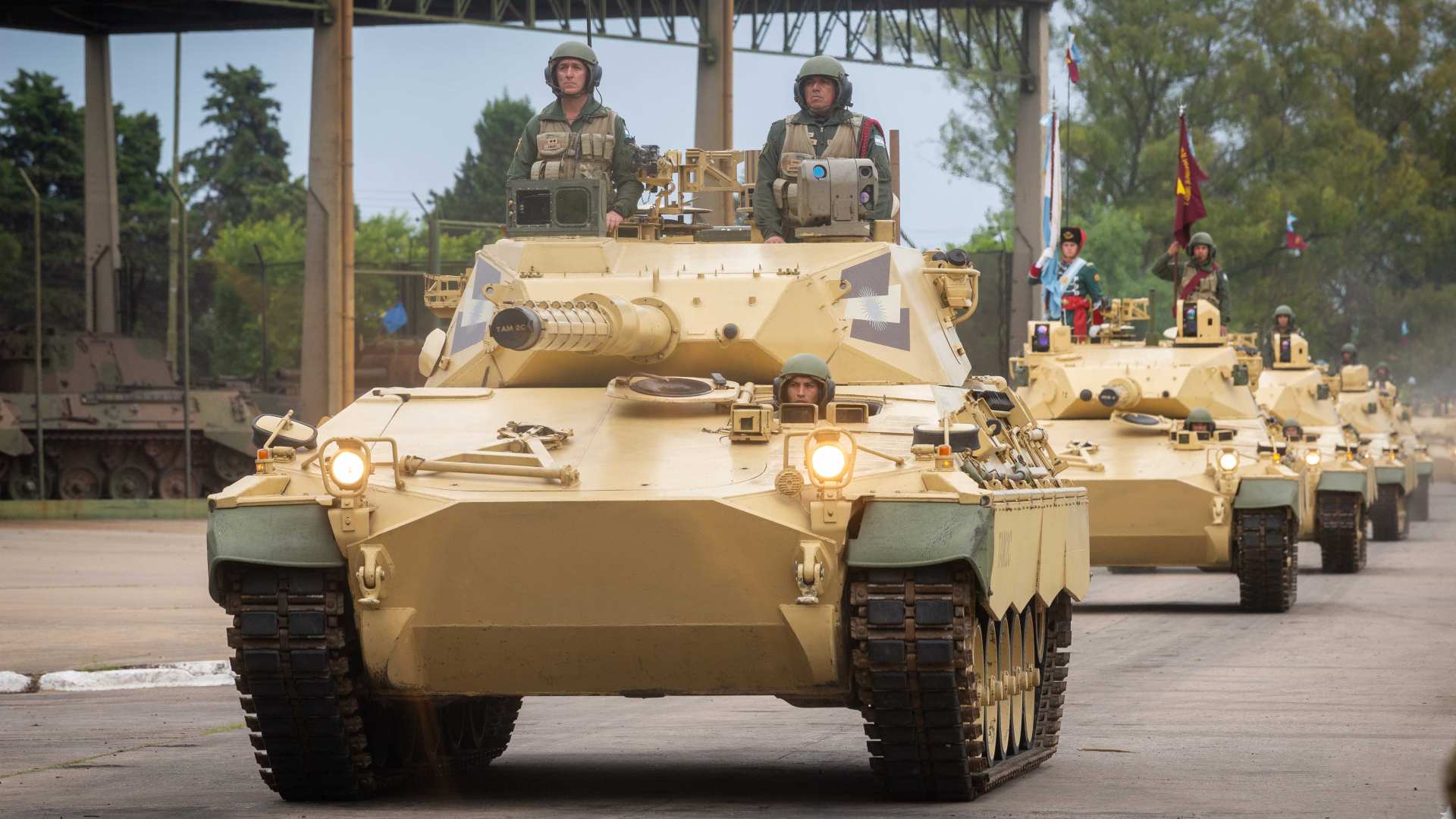
The first modernized TAM 2C A2 tanks were delivered publicly in July 2024 for the Tank Cavalry Regiment 8 at Magdalena. In December 2024, Argentina's Ministry of Defense reported delivery of ten TAMs modernized to 2C-A2, forming the first squadron fully equipped with the latest TAM version. Sources
Design and performance
The TAM retains an unconventional tank layout inherited from the Marder-derived design: the driver sits front-left, the powerpack is front-right, and the turret is mounted toward the rear. This arrangement shortens the vehicle and supports a relatively low, mobile 30-ton class design, but it does not provide the massive frontal armor architecture of heavier MBTs. Sources
The base TAM hull is all-welded steel. Forecast International reported protection against ballistic fragments and armor-piercing projectiles up to 20 mm caliber. The 2C / 2CA2 modernization does not have a publicly documented wholesale hull redesign; the program instead refurbishes, integrates, and modernizes selected hulls. Sources
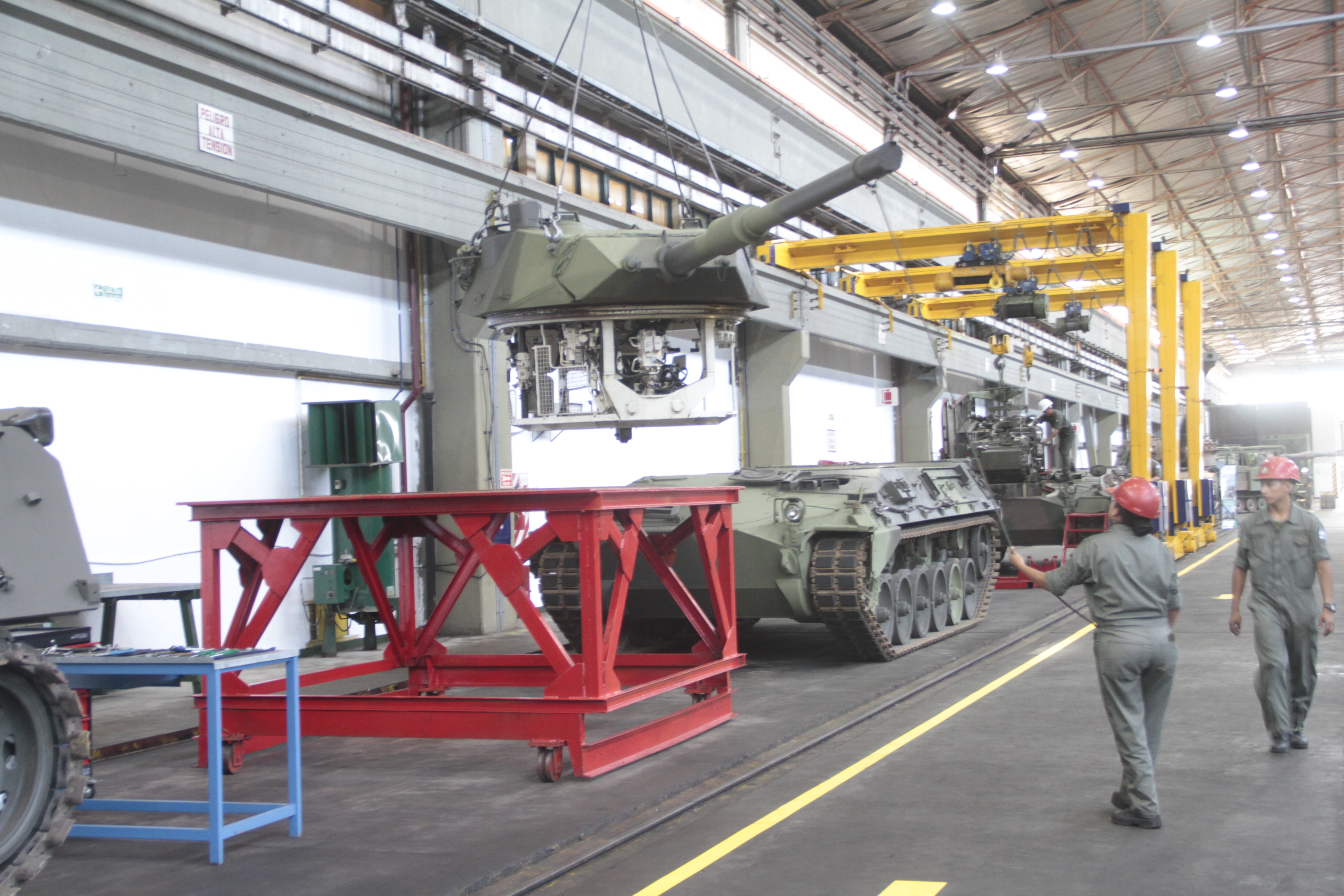
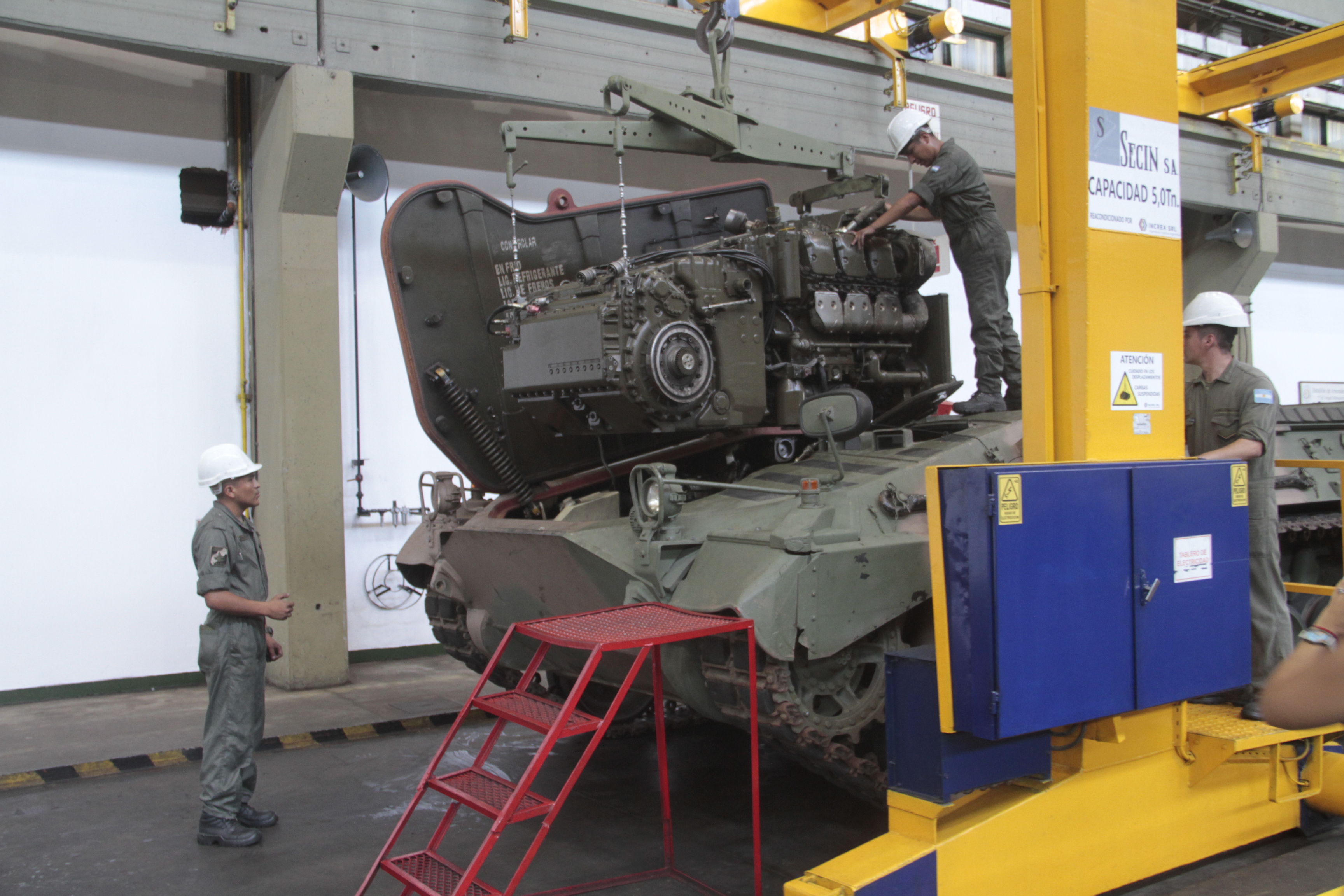
The TAM turret is welded steel and houses commander and gunner on the right and loader on the left. The TAM 2C / 2CA2 turret is heavily reworked internally and externally to accept electric movement/stabilization, digital fire-control, thermal sights, laser-warning sensors, automatic target-tracking-related hardware, an APU, and other electronics. Sources
No reliable open source gives a full armor-thickness map for either TAM 2C or TAM 2CA2. The base TAM's steel armor is consistently described as protecting against fragments and up to 20 mm armor-piercing projectiles; that is a light-to-medium protection level by MBT standards. The cited official evidence does not establish protection equivalent to that of a modern heavy main battle tank. Sources
The base TAM uses an Argentine-built 105 mm rifled gun, usually described as the C.360-TAM L51 or FMK.4 Modelo 1L, compatible with standard 105 mm tank ammunition. Official 2026 Argentine material identifies the TAM 2CA2 as armed with the FMK.4 Modelo 1L 105 mm cannon. Sources
The original TAM carried two MAG 7.62 mm machine guns, one coaxial and one for anti-aircraft/roof use, with approximately 6,000 rounds. Official 2026 material describes the TAM 2CA2 as carrying MAG 7.62 machine guns, but open public sources do not always specify whether every modernized vehicle retains the original exact ammunition stowage. Sources
Forecast International gives fifty 105 mm rounds for the original TAM. The 2C / 2CA2 uses the same 105 mm gun family, so fifty rounds is a reasonable baseline assumption, but the exact ammunition load after modernization is described as unconfirmed unless inspected in manuals or Argentine Army technical documentation. Sources
Fire control is the heart of the modernization. The official 2020 source lists a digital fire-control and firing system, thermal vision, automatic target tracking, and replacement of older hydraulic turret systems. 2023 and 2024 official reports repeat the emphasis on all-weather combat, improved precision, and digitalized fire-control. Sources
Official Argentine sources identify thermal vision for commander, gunner, and driver in the TAM 2C package, and 2026 official material mentions panoramic sights for commander and gunner. Zona Militar and Army Recognition identify Elbit COAPS / COAPS-L optronic sights on the A2 standard; these are plausible and consistent with official phrasing, but exact subsystem configuration by production vehicle is described as less certain. Sources
The TAM retains the MTU MB 833 Ka-500 diesel engine rated at 720 hp, paired with a Renk HSWL 204 automatic planetary gearbox in the base design. Official 2026 Argentine material gives the TAM 2CA2 as 720 hp and 31.5 tonnes, implying the engine type and power class remain essentially unchanged, while power-to-weight falls modestly with added equipment. Sources
The base vehicle uses torsion-bar suspension with six dual road wheels and three return rollers per side; the first, second, fifth, and sixth road-wheel stations have hydraulic shock dampers. The cited sources do not identify a fundamental change to TAM’s running gear in the 2C-A2 program. Sources
The TAM's mobility philosophy is high road speed and low weight. Forecast International gives a 75 km/h maximum road speed and 550 km maximum road range for the original vehicle, with optional rear fuel tanks extending range. Official 2026 material gives the TAM 2CA2 a 75 km/h maximum speed and 31.5-ton weight. Sources
The crew remains four: driver, commander, gunner, and loader. The modernization likely improves crew effectiveness more than crew comfort, chiefly through night/thermal vision, automatic target tracking, digital fault detection, improved displays, and electric turret systems. Open-evidence is insufficient for a detailed ergonomic assessment of production vehicles. Sources
The official 2020 source lists a communications system among the TAM 2C incorporated systems. Open sources reviewed here do not give a complete radio model list or battle-management integration standard for each fielded vehicle. Sources
Protection improvements are concentrated in warning, survivability, and fire suppression. The official TAM 2C list includes laser-threat warning and automatic fire suppression; Zona Militar identifies Elbit E-LAWS receivers on the A2 prototype; official 2026 material repeats laser-threat detection, automatic fire extinguishing, APU, electric turret drive, and driver thermal vision. Sources
The modernization package is also a sustainment program. 2024 reporting describes inspection and tuning of selected hulls to extend service life, while official Argentine sources emphasize local labor, training, IMPSA involvement, arsenal work, and national spares and maintenance inputs. This reduces reliance on a simple import pipeline but creates a demanding integration challenge across old hulls and new electronics. Sources
The main weaknesses are structural and generational: protection remains limited by the 30-31.5 tonne chassis; the main gun remains a 105 mm rifled weapon; exact ammunition and armor upgrades are not publicly documented; and conversion pace has been slower than program announcements. The advantages are equally clear: existing crews, facilities, mobility, and logistics are preserved while the fighting system receives a substantial sensor and fire-control leap. Sources
Production, operators, and combat record
Original TAM production was a multinational industrial project. Thyssen-Henschel designed the vehicle with Argentine requirements and Marder-derived technology, while Argentine facilities handled assembly and key components. Forecast International reported that final assembly and chassis construction occurred in Buenos Aires, while Rio Tercero handled construction and integration of the Argentine C.360-TAM L51 gun and turret. Sources
Original production quantities are the most persistent data problem. Forecast International's archived 1997 report states that 193 TAM tanks, including two prototype/developmental tanks, had been delivered by January 1, 1997, and that production was halted with incomplete vehicles stored. Sources
For TAM 2C / 2CA2, the well-documented industrial story is a modernization line rather than new-build tank production. The work is centered at the Argentine Army's Arsenal system in Boulogne, especially Batallon de Arsenales 602, with DIGID project leadership, Elbit Systems technology integration, IMPSA turret and metal-mechanical work, Fabricaciones Militares involvement, and FONDEF-linked funding. Sources
Official sources describe 74 vehicles as the first-stage modernization target. Secondary sources discuss a possible extension for about 30 additional vehicles, but that can be distinguished from the well-documented first-stage number. Public evidence shows a slow path through prototypes and pre-series work followed by first operational deliveries in 2024. Sources
Argentina is the only confirmed operator of the TAM 2C / 2CA2 modernization line. The original TAM also remained an Argentine service vehicle; several export opportunities were reported or announced in the 1980s, but open sources reviewed here indicate those deals either fell through or were not completed as originally described. Sources
The operational unit most visible in official 2024-2025 reporting is Regimiento de Caballeria de Tanques 8 at Magdalena, Buenos Aires. July 2024 reporting states that first delivered TAM 2C A2 vehicles were destined for RCT 8; September 2025 official coverage shows RCT 8 exercising with TAM and TAM 2C-A2 vehicles in night firing and crew-evaluation activities. Sources
As of the latest official source used in the cited record, June 2026, TAM 2C-A2 vehicles were presented among current Argentine Army capabilities at Expo Ejercito 2026. This supports the status “active / upgrading,” matching the cited accounts account. Sources
No confirmed combat use of TAM 2C / TAM 2CA2 was found in the official or reputable open sources reviewed through June 2026. Official coverage documents firing trials, technical-operational evaluation, production-line events, deliveries, exercises, and public displays, not combat deployment. Sources
The base TAM was introduced in time to be relevant to Argentina's 1982 Falklands/Malvinas crisis but was not used in the islands. Secondary histories note deployment to southern Argentina as a deterrent and later domestic use during military uprisings in the late 1980s and 1990, including the carapintadas episodes. Because those details come from secondary accounts rather than primary operational records in the cited record, they are treated as less certain. Sources
The modernized A2 standard has documented training use. In September 2025, the Argentine Army reported RCT 8 exercises involving TAM and TAM 2C-A2 vehicles, including tactical movement, simulated combat procedures, and night firing designed to evaluate crews and system performance under reduced visibility. Sources
Myth versus evidence: public statements sometimes frame the TAM 2C-A2 technology as comparable to systems in the most modern tanks. That is best understood as a statement about sensors, fire-control, and electronics, not as evidence that the TAM 2CA2 has the armor, gun, or growth margin of a 60-70 tonne contemporary MBT. Sources
Legacy and historical evidence
Against contemporaries such as Leopard 1, AMX-30, T-55/T-62 upgrades, and lighter regional armored vehicles, TAM 2CA2 is competitive in mobility and electronics but constrained by armor and gun caliber. Against Leopard 2A4/2A5, M1A1/A2, Leclerc, Merkava, K2, or Type 10-class vehicles, its survivability and kinetic overmatch are much weaker, although its operating costs and infrastructure burden are lower. This comparison is interpretive and depends on ammunition, crew training, terrain, and tactical integration. Sources
The TAM family's first legacy is adaptation: Argentina accepted that infrastructure, budget, and industry mattered as much as theoretical armor superiority. The result was a vehicle that looked like a scaled-down MBT but was optimized around mobility, local assembly, and family derivatives. Sources
The TAM 2C / 2CA2 legacy is the second adaptation: extending a mature Cold War platform through electronics. It reflects a global pattern in which fire-control, thermal imaging, electric drives, warning receivers, and auxiliary power can dramatically improve the practical combat value of old tanks without changing the chassis. Sources
Doctrinally, the modernized TAM continues to support Argentina's armored brigades and training pipeline. It also preserves domestic knowledge in tracked-vehicle maintenance and integration. The 2024-2026 official coverage suggests that public display and training value are also important: the A2 standard has become a visible symbol of military modernization. Sources
Surviving vehicles are primarily operational, stored, or training vehicles rather than museum exhibits. No dedicated museum-survivor survey was completed in the cited account. These details remain unconfirmed in the cited evidence. Sources
Common misconceptions: the TAM is not simply an indigenous Argentine tank; it is a German-assisted, Argentine-assembled and adapted family. The TAM 2CA2 is not a new tank but a modernization of old hulls. And “latest-generation systems” does not demonstrate “latest-generation armor protection.”. Sources
Argentine government and Army accounts document TAM modernization milestones from 2020 through 2026. Earlier technical and industrial history relies on dated reference reports; production-total conflicts and some subsystem details remain unresolved. Sources
Photographs and image credits
Background reading and references. Each photograph has its own source and credit.
Sources and further reading
Background reading and references. Each photograph has its own source and credit.
- [ARG-2020] Proyecto TAM 2C - La modernizacion de nuestros caballos de acero. Argentina.gob.ar / Ejercito Argentino. 14 January 2020.
- [ARG-2023A] En Magdalena, Taiana superviso las pruebas de tiro del Tanque Argentino Mediano 2CA2. Argentina.gob.ar / Ministerio de Defensa. 11 May 2023.
- [ARG-2023B] Modernizacion del TAM 2CA2: Comprobacion de resultados de la Evaluacion tecnica operacional y presentacion de produccion seriada. Argentina.gob.ar / Ministerio de Defensa. 12 July 2023.
- [ARG-2024A] Petri encabezo la entrega de los primeros tanques TAM 2C A2 modernizados. Argentina.gob.ar / Ministerio de Defensa. 5 July 2024.
- [ARG-2024B] Con el primer escuadron de TAM 2C-A2, el Ejercito Argentino da un paso historico hacia su modernizacion. Argentina.gob.ar / Ministerio de Defensa. 20 December 2024.
- [ARG-2025] Tiro nocturno de tanques en Magdalena. Argentina.gob.ar / Ejercito Argentino. 25 September 2025.
- [ARG-2026] Un exito de todos los anos, que se renueva: Expo Ejercito Argentino edicion 2026. Argentina.gob.ar / Ministerio de Defensa. 3 June 2026.
- [ARG-TERMS] Terminos y condiciones. Argentina.gob.ar. Accessed 2026-06-04.
- [FI-1997] TH 300 (TAM - Tanque Argentino Mediano) and TH 301 - Archived 2/98. Forecast International / Military Vehicles Forecast. February 1997 archived report.
- [TE-2020] Tanque Argentino Mediano (TAM). Tank Encyclopedia / Tank-AFV network. 23 May 2020. Useful secondary source; not
- [TE-2018] “TAM 2C.” Tank Encyclopedia / Tank-AFV network. Supplementary reference; publication date uncertain. Source
- [ZM-2023] Ejercito Argentino: Algunos detalles del prototipo TAM 2C-A2. Zona Militar. 31 May 2023.
- [ZM-2024] The Argentine Army together with Elbit Systems started the VC TAM 2C A2 instructors course. Zona Militar. 26 March 2024.
- [AR-2025] “Argentina and Elbit Systems Continue TAM 2C Medium Tank A2 Modernization Program.” Army Recognition, 27 August 2025. Delivery and status figures refer to their reporting dates. Source